
I received some great feedback on the last article. Keep it coming!
I would like to make a minor correction I received from a French speaker.
In the previous newsletter, I said:
"Do you speak English?" in French (Parles-tu anglais?).
A better way to say that is “Parlez-vous Anglais?”
Use “Vous” instead of “Tu”, because “Tu” is a little too familiar. I don’t want you to offend any French people.
That 5 years of schooling with Google Translate failed me! 🤦♀️
The whole point is that locals can usually spot a foreigner a mile away, by the clothes they wear or how they behave. But if you give their language a shot, they'll usually appreciate the effort. It sets you apart from other tourists who don't even try.
Another side note: Let’s wish our fellow traveler, George a Happy Birthday! Thank you for the kind words!
Let’s dive in:
I've received a question from a traveler about how to travel with health conditions.
Sure, there might be a ton of reasons why someone might decide to skip out on traveling.
But…
I'm a firm believer that anyone can hit the road, no matter their age, stage in life, or even hurdles like tight budgets, family commitments, or health needs.
Once they get a handle on a few travel tips tailored to their situation, they're good to go!
Even though I'm fortunate enough to be healthy, I've had my share of emergencies. And I can honestly say, being alone and sick in a foreign land sucks!
So, I'm essentially asserting that these experiences qualify me as an expert. ;)
Side note: I can burn hours perfecting a video edit, and it barely gets any attention. But the moment I post a video of me taking a tumble, it's the best thing ever.
Let’s get back on topic.
If you have health challenges, here are a couple of recommendations to make your trip smoother.:
Take things much slower
Traveling is very taxing on the body. Simple things like flights and switching time zones can knock the body out of its rhythm, and you can get sick as a result. During my trips, it takes me a week or so to regain my energy levels. Of course, I'm running around, being active, and acting stupid. I simply mean that traveling is taxing on the body.
To maintain your energy levels, I recommend heading straight to your hotel room to rest as soon as you land at a destination.
Do not keep medication in checked luggage
It's advisable not to place your essential medication in your checked luggage, as there's a risk of it being lost. This risk heightens, particularly during flights with multiple layovers where lost luggage could potentially take days to be retrieved, if at all. Therefore, it is highly recommended to carry your medication in your carry-on bag or to have it easily accessible at all times.
Get vacation packages
Check out all-inclusive resorts and cruises if you're traveling with health concerns. They've got a crew ready to lend a hand if something happens. Personally, I'm all about that cruise life. Good food, great service, and you're treated like a VIP. Once I start slowing down, you'll catch me hopping from one cruise to another. Don’t worry, the newsletters will still be released on Mondays. ;)

Get travel insurance
God forbid if anything were to happen, who wants medical bills as their souvenirs from a vacation? Moreover, you'll want to be treated as soon as possible and have the freedom to choose your treatment location. Some travel insurance plans, for instance, include medical evacuation coverage, allowing you to be transported back home for treatment instead of being confined to the nearest hospital. I personally use Safety Wing*, but you should find a plan that aligns with your individual needs and priorities. *affiliate link
Prioritize domestic travel
I strongly recommend traveling more within the United States. While I enjoy visiting Europe, it does have accessibility issues. Countries like the Netherlands, with their numerous staircases, could pose difficulties for mobility.
Choose Newer Cities
Try focusing on newer cities when traveling. These places typically have a more up-to-date infrastructure that's designed with everyone in mind. Older cities, though charming and my favorite due to their rich culture, were built before accessibility became a priority. Despite efforts to retrofit them, they may still fall short. We're talking about things like ramps, elevators, and other features that make getting around a breeze. Plus, you'll find that roads and room sizes can be a bit tighter in older cities. So, if you're planning a trip in the U.S., you might want to consider Phoenix over Boston, for example.
Bring family along
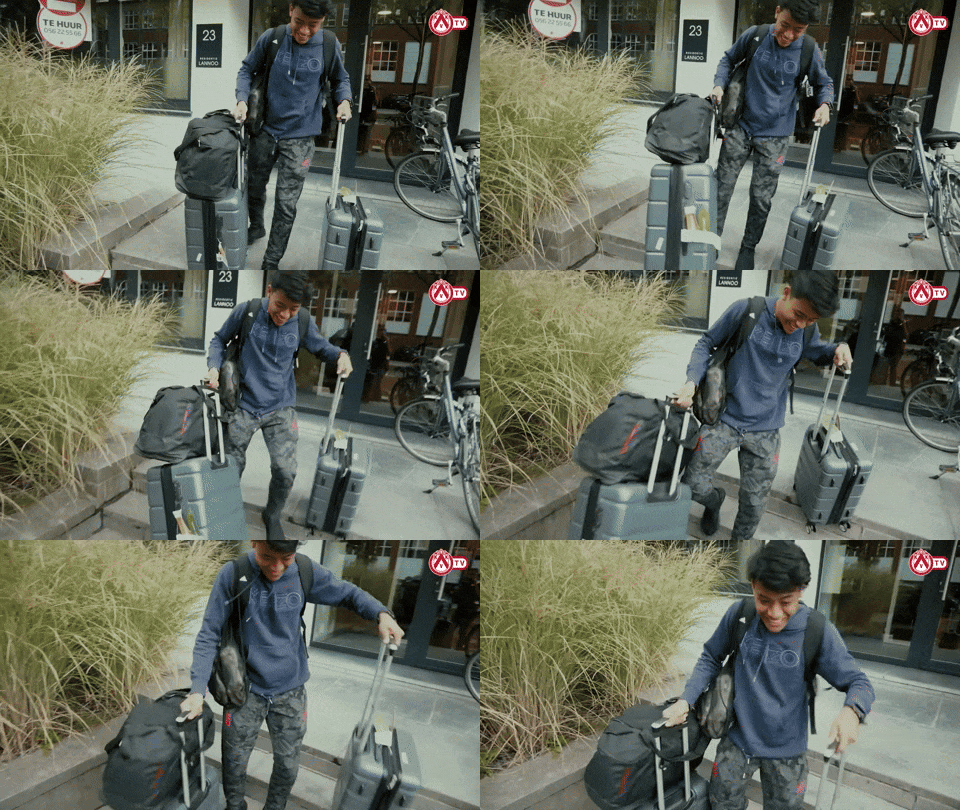
Going with family is great. Not only can you create memorable experiences with them, but they can also serve as free porters!
Put those kids to work!
Please don’t feel bad. It’s a small price they have to pay for you giving them some culture.
Do your medical homework
It's strongly recommended to carry your medical information with you at all times in case of an emergency where you're unable to communicate. Using something like a medical bracelet helps ensure that your health information is readily available. You should also map out all the local hospitals, consult your doctor before traveling, and confirm that the local water is safe to drink.
P.S. There’s so much to unpack with this topic that I have more to share. Be on the look out for part 2.
What advice do you have for traveling with health conditions?


